We have another paper attempting to describe European natural land cover in the early Holocene, before human activity had its transformative impact. It’s fascinating and lends more support to the ‘part-open’ hypothesis. It suggests that European regions were generally a mix of closed canopy woodland, more open wood pasture, and even more open grassy shrublands.
Read it here (mercifully, it’s open access): DOI: 10.1126/sciadv.adi9135
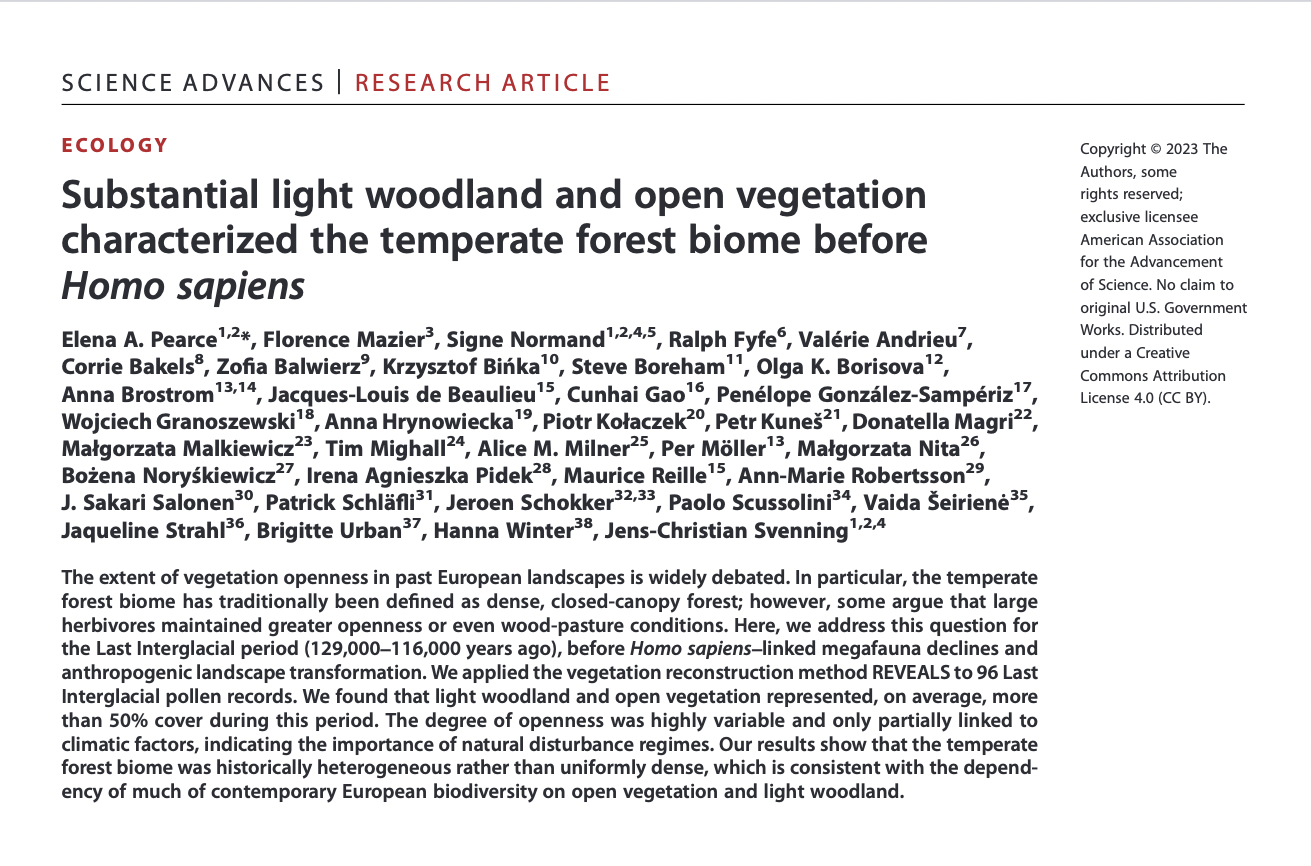
As the authors suggest, the finding that natural European landscapes were a mosaic with plenty of open habitat is consistent with the fact that so many European species appear to favour - even depend on - more open, sunny habitats. European Bison and Aurochs are (were) mosaic specialists requiring access to bulky herbaceous vegetation. Most Shrikes are essentially open scrubland-grassland specialists, as are many bat species, reptiles, butterflies etc.